Or How I Fell in Love with a Demon and Didn’t Care

I have six pages worth of notes to try and summarize for you all. Six pages and seventeen and a half hours of playtime.
Promise I’m going to try to make this as brief as possible. Update after writing: they did not, in fact, keep it brief.
For the sake of ease, and to help you avoid any story spoilers, I’ve broken things down into a few sections: General gameplay and features, themes, and then overall story. It was so difficult to narrow it down in this way. Especially as I was trying to avoid any major spoilers. If you want to avoid even the hint of a spoiler, I would avoid the last two sections.
Full disclosure: I offered to Studio Interlude to review Devil’s Liminal during the Non-Binary Coded Games Event on Steam. They provided me with a key for free, which was so generous of them. Thank you to Studio Interlude for the trust!
Gameplay and Features
I want to start off this section with two very important features for visual novels, in my opinion, those being accessibility and content warnings.
The accessibility options in this game are a joy! Auto text — which I don’t use because I have a tendency to just…wander away from the PC at times – is a given and can be easily set to your reading speed preference. Same with text skip, another standard feature of VNs. What really stood out were the text options and background color options.
Having OpenDyslexic as an available font always sets a game apart. While I may not be dyslexic, I do find the font itself to be easier to read overall, and I think games that require a lot of reading should consider adding it as an option. It really didn’t take away from the horror of the game, I really felt like it enhanced it given that I could read what the horror was. Since I know a lot of resistance to offering it hinges on this idea of it looking like Comic Sans: it doesn’t and this should not be a factor in considering increasing accessibility options. Even more to the point, I was able to play this game while actively developing a migraine, and it was largely because of font choices and the ability to set my own text box options.
The text box options…I am about to advocate that it become standard practice to allow some customization of text boxes! Devil’s Liminal allows you to adjust the saturation of the text box, set outline thickness, set saturation of the text, all without sacrificing the overall style of the game itself. That’s a huge achievement, I think! It’s rare in games that you get the chance to fiddle with things in this way and for a game that is entirely text-based, I can’t stress enough how much of a difference that makes.
While we’re discussing things that can be found in the sub-menus, I want to direct everyone’s attention to where the Content Warnings live. While you’re given the chance to review the warnings before starting the game, I was a little disappointed to find the warnings otherwise living in the About section of the menu. For a game this heavy, with this much going on, I would advise you to take the time to read through all of them and think about the potential ways they might intersect. Even after having read through all the warnings and generally being prepared for them, I was still caught off-guard by a very specific set of things that led me to a pretty triggered 48-hours.
All I would say is, I wish the warnings were more accessible in the main menu, and that players should definitely heed them. For comparison, I really enjoyed and appreciated the fact that Quality Dreams, Reasonably Priced included their content warning on the main menu and provided more context under, essentially, a spoiler menu for each warning. Personally, it made it easier to access and I liked that each time I started up the game, I could review the content I was potentially getting into.
Update 9/1: After providing this review to Studio Interlude for review before posting, they’ve taken the above advice and added the trigger warnings to the main menu! Thank you so much to Studio Interlude for adding this!
One last thing I want to point out about the game from a stylistic point of view: the music and the use of liminality in the game.
Yet again, I am experiencing a case of “I left the game running and tabbed out just to listen to the soundtrack while I scroll bsky.” It’s infectious in the right way. I’m still finding myself humming certain musical phrases while doing other tasks. There isn’t a ton in the way of soundtrack but what it does have really helps set the scene.
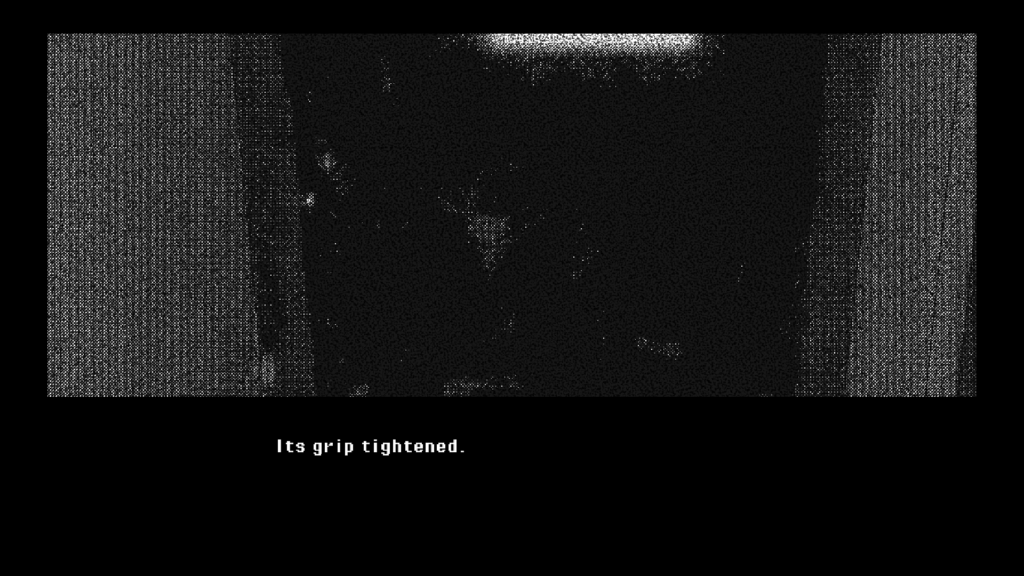
My favorite part, personally, was how liminality was cued for the player. It felt true to an episode of disassociation that I can’t quite express. The static brain feeling that puts a weird filter over everything and the way sound just seems to be white noised away. I think this game does a great job of capturing that feeling and translating it into a recognizable visual/audio cue for the audience.
Lastly, I know the devs will want me to mention this: two lady loves to try and romance AND five different endings. To be honest, I played long enough to get one ending and I will talk minimally about it in the last section, but I am tempted to figure out which decision points matter most so that I can see the other four endings I didn’t get.
You came here for toxic tragic yuri, right? Good, cause you’re gonna get plenty of it with this game.
Themes
All the gameplay and features though don’t highlight the reason why I think you should play this game:
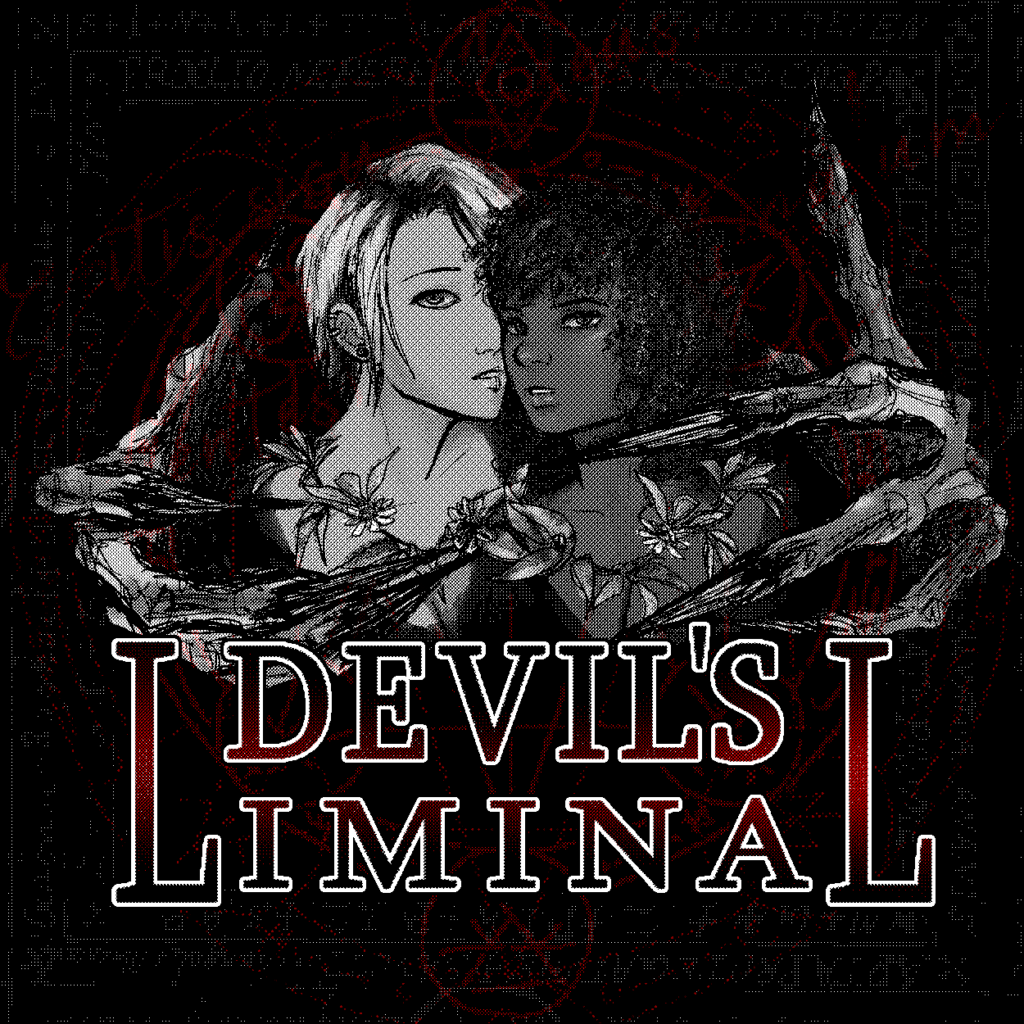
Demons, abuse, the occult, and generational baggage
Mind the above and mind the fact that I just talked about the heaviness of the content warnings. Doing my best to pull out most of the punch of the content, but I always prefer people take care of themselves than read my long-winded articles.
Neglect, abuse, and body image/fat phobia are the least of the content warnings. They’re just the start to a whole panoply of abuse topics. From family, friends, and former partners.
It takes about a week of in-game time (roughly 2ish hours gameplay time) before the content warnings become very real. At first, there’s just small moments where you go “oh, yea, ok, that stings a little” but over enough time it turns into “ooof, ow, wow…yea, I walked right into that.” Which is honestly brilliant pacing!
One of my gripes with how abuse is displayed in media is that it’s usually very direct and jarring. That’s really not the experience of it. Instead, much like in real life, the abuse in Devil’s Liminal layers on top of one another. It grows. So, keep that in mind when you read the warnings. They will be slow going, but they’re there, and they’re very real.
With Margo having been away at a private school, getting to live somewhat trigger free, she has a level of removal from remembering how bad it really was and that is presented in the slow-revealing narrative. She moves back into her childhood trailer with her mom and at first things seem fine, not great, but fine. Mom doesn’t start off abusive, but it quickly begins to build.
Definitely something worth keeping in mind, since I don’t think there was a warning for mother-child conflict…which can have its own specific pains. A lot of people can struggle to understand how mother’s can be like this with their children and a lot of media shies away from showing this sort of conflict. It’s only been recently that mother-daughter tension has become a topic in media again. If you’re sensitive to this sort of conflict, I would say still play this game but be warned that as the game progresses the conflict gets worse and it ends up involving both parents.
I think the devs did a great job with this particular tension, it felt very visceral and relatable, even if my own experiences were not quite this pronounced. This conflict between them and the way mom could be so hateful…it’s what ultimately triggered me, but by that point we’d dealt with the mom problem, so to speak. I wont say more on that plot point, just be warned that mom isn’t winning any Mom of the Year awards anytime soon.
There’s also the theme of family and what is a family that runs through the story.
Margo’s blood related family is a mess of their own making. Well, it might not be of their own making, but I don’t want to spoil too much there. We get to contrast this with several other families of all shapes: Jade’s seemingly normal family, Bec’s divorced parents, Clara’s similarly toxic situation, and even get some peeks into the family lives of a few of the other trailer park raised friends Margo has. Not to mention some of the other family and chosen family bits we get later on in the story.
At one point Margo’s half-sister shows back up and the resulting confrontation she and Helen have really plays into the AFAB need to forgive family that hurt you. Particularly when you consider what kind of hurt we’re talking about, I think it really opens a door into a particular time where the onus of maintaining family harmony and protecting family abusers was put firmly on the shoulders of the female victims. It’s an absolutely ugly and not often exposed part of being AFAB at a certain period of time/in certain American communities. The shame, the harassment, and then guilt families – particularly other female identified family members – would lob at the member who dared to speak up.
If you’re a savvy reader, hopefully you can understand what I’m alluding to here since I don’t want to outright spoil the story beat for someone.
There are a lot of moments in the game like this, where you and Margo go through something profound, and in the end it leads to these reflection points. Especially in the middle portion of the game. The stakes feel high, you go through these huge moments with Margo and company, only to then be on the other side and left a bit reeling. Definitely use those points to take a break, get a snack, and just have a good think.
Of course this wouldn’t be a game about the occult without the obvious: occult themes!
Up front I’ll admit that I know far less about Azores folklore than any of the other occult topics being pulled from, so I can’t speak to how well those are represented. A lot of what I do recognize crosses over with a lot of other folkloric traditions. And I don’t mean your sanitized “love and light” and herbalism traditions, I mean the blood, sweat, and piss of it all. If you don’t know what I mean or think I’m being crass, I’m definitely not; there are magical uses for all bodily fluids.
What I enjoy is the blending of the more general folklore traditions – in this case most of that is focused on blood based rituals, as a heads up – with high occult practices. From the moment we find the Bible covered in strange writings and runes, I knew I was in for a fun time with mixing occult traditions. We even get a little blending in of Buddhist cosmology with the talk of reincarnation and Hungry Ghosts.
I did find it interesting, as a witch and Buddhist, the merging of cosmologies and practices. To be clear, I think that’s perfectly fine – I’m not a traditionalist by any means and firmly believe that whatever helps you understand the vastness of inner-space is better than having no understanding, so long as you don’t get lost in the sauce. More than that though, weaving the occult through the story is what gives the game that magical realism quality and heightens the liminality, and I think it’s the core of the difference between the two romance paths. Do you give in to magical thinking or do you maintain a healthy amount of skepticism?
Personally, I might go back and see what happens if I take Clara’s route instead…
Overall Story
…and that idea perfectly dovetails into the last section: overall story.
There is just so much to unpack in this game. In the best way.
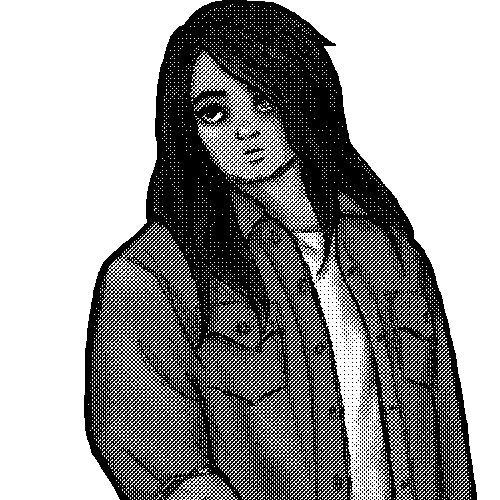
You play as Margo, a trailer park raised girl from Arizona who had a neglectful home at best. It’s a place that threatens to turn her into a product of it: mean-spirited, guarded, and combative. But things change when Margo goes off to a private school on the other side of the state. With distance and help from the program that accepted her, she gets the chance to experience what it’s like to be away from all the hurtful things in her life, giving her perspective on how things could be.
At the start of the game, Margo has returned home for the summer gap between high school and college. She’s already got herself a summer job and has barely had time to settle back into things when she finds a stray black cat baking in the Arizona heat. Margo chooses to take care of the cat, get it to the vet before her first day of work, and is surprised when two days later it shows up in her bedroom after having escaped the vet’s clinic.
I love Margo. I’m just going to come out and say it. Margo is an easily relatable character if you’re familiar with what it’s like to grow up in an abusive or neglectful home. You can tell she wants things to be different, desperately wants things to change, and deeply believes that all the bad things happening to her are her own fault. There were so many moments where I wanted to pull Margo out of the game, give her a hug, and explain to her just what the demons haunting her really are.
There are truly so many layers to this game, so I’ll spit out how I chose to play this game on my first play-through: I came to it with my own past of trauma and actively chose options from the perspective of someone on the other side of a lot of it (thank you, therapy.) Everything supernatural? I read it through the perspective of someone who was looking for spiritual answers to something very mundane and painful.
That isn’t to say the abuse and hurt hurled at Margo from various people are just “mundane.” More that these hurts are an every day occurrence. Margo has no escape from the slights, the shoving, or the ugly truths about her family that she begins to learn and remember. When those things are just every day existence, they become mundane, and you begin searching for reasons why it keeps happening. Turning to spiritual reasons for why people keep hurting you is a natural response because, in a lot of ways, it’s all you have control over.
This game really leans into that and breaks it up with moments of friendship or banal seeming interactions. Hanging out with Jade at an open mic, going to work, seeing a concert with Bec and friends – these moments punctuate a lot of the more difficult story moments through the majority of the game and the contrast between them all is what kept me hooked.
It’s the last third of the game where things really get wacky.
By that point we’ve largely just been dealing with Margo and her conflict with family. Then, suddenly, that conflict involves the whole town. At the same time, Margo’s dreams dramatically change and we begin getting pieces of a more distant past that is imprinted onto Margo’s soul.
It’s honestly a lot going on by the end and I’ll admit to some save-scumming. Not much, but I did want to see how different decisions would change things. Overall though I would go back to my original choice because I ultimately liked those decisions better. That said, at the start of the game I didn’t do a lot of saving before decisions, but in the later half I was saving before every decision…just in case.
And in the end? While I’m glad to have those saves to go back to, I was really satisfied with the ending I got. Out of five possible endings, I really felt like I got “the good ending” of it all. My only surprise was that I somehow ended up without a love interest, despite trying to be close with Bec. I suppose there was just more that I didn’t manage to do to win her over.
Still, I felt like it was the perfect ending to the story I told, which is what really matters in a game like this. Does the ending match the choices you made along the way? For this game, at least for the ending I experienced, I would say yes. I am very tempted to go back and see all the other possible endings, but for now I’m more than satisfied with my journey.
Once again, I’m going to tell people to mind the warnings. This game doesn’t shy away from difficult scenes – emotionally and in terms of graphic description. The depictions are very realistic and I mean that. Please read the warnings and make sure you’re capable of handling them.
That said, I think this is a really strong entry for the horror magical realism genre. All the elements of this game really work well together: the background music loops in an infectious way, the character designs are fun and recognizable at a glance, the scenes of this town in Arizona both feel specific and general enough to Americana, and then the narrative comes in to tie it together. With the release of the full version of things, the team at Studio Interlude are including new scenes to make that even more true and I can’t wait for you to get to experience this game as the team had wanted.
If you’re into the occult, maybe magical realism as a genre, and can withstand the content warnings…CHECK THIS GAME OUT! Heck, even if you just like games with really strong and interesting narrative elements, CHECK THIS GAME OUT! At the very least, give the demo a look and see if it’s a good fit for you.
That’s all for this Vibe Check, and I would say this game easily passed. Thank you again to the team over at Studio Interlude for providing me with a key! Until next time, stay safe and sane!
Leave a Reply